JEE Main class9_atom_structure — practice questions
120 free MCQs with worked solutions. Tap any question for the answer + explanation, or practice them all in the app.
Practice JEE Main class9_atom_structure in the app →The maximum number of electrons that can be accommodated in the $n$-th shell of an atom is:The four quantum numbers describing an electron in an atom are: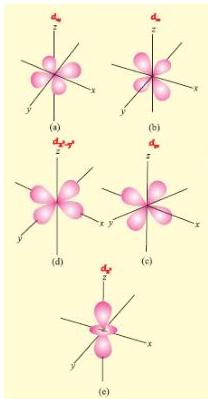
Hund's rule of maximum multiplicity states thatAccording to Heisenberg's uncertainty principle, $\Delta x \cdot \Delta p \geq$:Two electrons in the same orbital must have:Calculate the de Broglie wavelength of an electron moving at $10^6$ m/s. (Take $h = 6.6 \times 10^{-34}$ J·s, Rutherford's alpha-particle scattering experiment led to the conclusion that the atom:According to Bohr's postulate, the angular momentum of an electron in the $n$-th allowed orbit of a hydrogen-lThe radius of the $n$-th Bohr orbit of a hydrogen-like atom of atomic number $Z$ varies as:The total energy of an electron in the $n$-th orbit of a hydrogen atom is given by $E_n = -13.6/n^2\,\text{eV}The minimum energy required to remove an electron from the ground state of a hydrogen atom is:The kinetic energy of an electron in the $n$-th Bohr orbit of a hydrogen atom is related to its total energy $The Rydberg formula for the wavelength of radiation emitted when an electron in a hydrogen atom jumps from levWhich spectral series of hydrogen lies entirely in the ultraviolet region?The hydrogen spectral lines that lie in the visible region of the electromagnetic spectrum belong to the:The major shortcoming of the Rutherford atomic model was that it could not explain:For a hydrogen-like ion of atomic number $Z$, the ground-state energy is:An electron in a hydrogen atom undergoes a transition from $n = 3$ to $n = 2$. The energy of the emitted photoBohr's first postulate: electrons revolve in ___ orbits around the nucleus.In Bohr's model, angular momentum of an electron in orbit n equals:Energy of electron in n-th orbit of hydrogen:Principal quantum number n indicates:Number of orbitals in subshell of azimuthal quantum number l:How many electrons can fit in a single orbital?Electron configuration of carbon (Z = 6):For hydrogen, wavelength emitted in n=3 to n=2 transition (Balmer):de Broglie wavelength of an electron with momentum p:Heisenberg uncertainty principle:Number of subshells in shell with n = 3:Electron configuration of nitrogen (Z = 7):Total number of electrons that can occupy shell with n = 4:Magnetic quantum number m_l for a 3d orbital can be:Wavelength of light needed to ionize hydrogen from ground state (13.6 eV):Radius of n-th Bohr orbit for hydrogen (a₀ ≈ 0.529 Å):Effective nuclear charge Z_eff for the 2p electron of carbon (using Slater's rules approximately):For He⁺ ion (1 electron, Z = 2), energy in ground state:The Pauli exclusion principle states that two electrons in an atom cannot have:Energy of the photon emitted in a hydrogen transition from n=4 to n=2:Number of nodes in a 3p orbital (n=3, l=1):For Bohr's hydrogen-like atom, what is the velocity of electron in n-th orbit (in terms of fine structure consPhotoelectric effect: when light of frequency ν falls on a metal of work function φ, KE of emitted electrons iThe wave number $\bar{\nu}$ of electromagnetic radiation is defined asIn vacuum, the velocity of electromagnetic radiation isA photon has wavelength $400\,nm$. Its frequency is approximatelyThe wave number of a photon of frequency $6 \times 10^{14}\,Hz$ (in vacuum) isAccording to Planck's quantum theory, energy is emitted or absorbed in discrete packets calledThe energy of a photon of wavelength $\lambda$ is given byA photon of wavelength $300\,nm$ has approximately what energy in eV? (Use $hc = 1240\,eV\,nm$.)In the photoelectric effect, the kinetic energy of the ejected electron depends onThe threshold frequency $\nu_0$ for a metal is the minimum frequencyLight of frequency $\nu = 2\nu_0$ ejects photoelectrons from a metal with threshold frequency $\nu_0$. The maxIn a photoelectric experiment, doubling the *intensity* of incident light (frequency unchanged) willRutherford's $\alpha$-particle scattering experiment used a thin foil of which metal?In Rutherford's experiment, the observation that a few $\alpha$-particles bounced *back* impliedThe radius of a nucleus of mass number $A$ is approximately $R = R_0 A^{1/3}$ with $R_0 = 1.33 \times 10^{-15}Bohr's postulate quantises the angular momentum of an electron in a stationary orbit asFor a hydrogen-like atom of nuclear charge $Z$, the radius of the $n$th Bohr orbit scales asThe energy of the $n$th Bohr orbit of a hydrogen-like atom isThe ratio of the radii of the third Bohr orbit of $He^+$ and the first Bohr orbit of $H$ isThe velocity of the electron in the $n$th Bohr orbit of a hydrogen-like atom is proportional toThe energy required to remove the electron from the first excited state ($n=2$) of $He^+$ isWhich series of the hydrogen spectrum lies entirely in the *visible* region?Rydberg's formula for the wave number of a hydrogen spectral line isWhen an electron in a hydrogen atom returns to the ground state from $n = 5$, the maximum number of distinct sThe longest wavelength line in the Lyman series of hydrogen corresponds to the transitionA hydrogen atom in its ground state absorbs a photon and is excited to $n = 4$. The number of *possible* spectThe de Broglie wavelength of a particle of mass $m$ and momentum $p$ isThe de Broglie wavelength of an electron in the $n$th Bohr orbit, in terms of the orbit radius $r_n$, isAn electron is accelerated through a potential difference of $100\,V$. Its de Broglie wavelength is approximatHeisenberg's uncertainty principle relates the uncertainties in position and momentum asThe minimum uncertainty in the velocity of an electron whose position is known to within $\Delta x = 0.1\,nm$ The principal quantum number $n$ can take valuesFor principal quantum number $n$, the orbital quantum number $l$ takes valuesFor orbital quantum number $l$, the magnetic quantum number $m_l$ takes valuesHow many orbitals are present in the $n = 3$ shell?The maximum number of electrons in the subshell with $n = 4, l = 2$ isWhich set of quantum numbers $(n, l, m_l, m_s)$ is **NOT** allowed?Hund's rule applies during the filling ofThe Aufbau principle dictates that orbitals fill in order of increasingWhich of the following orbital shapes is dumbbell-shaped along an axis?How many *angular* nodes does a $3d$ orbital have?The number of *radial* nodes in a $4s$ orbital isThe ionisation energy of hydrogen in its ground state isFor $He^+$, the ionisation energy from its ground state isWhich transition in the hydrogen atom emits the largest amount of energy?Which of the following experimental phenomena could **NOT** be explained by classical EM wave theory?The Bohr model failed to explainIn the photoelectric effect, the *stopping potential* $V_0$ varies with the frequency of incident light asWhich of the following is **NOT** a possible set of quantum numbers for a 3d electron?The total number of electrons that can fit in the $M$ shell ($n=3$) isThe Bohr radius for hydrogen ($n=1, Z=1$) is approximatelyThe proton was discovered through experiments involvingThe neutron was discovered byIn Thomson's atomic model (plum-pudding), the atom isThe Bohr orbit velocity of the ground-state electron in hydrogen is aboutThe Rydberg constant for hydrogen, in SI units, isPer NCERT Class 11 Chemistry, what is the ATOMIC MASS UNIT (u) — used to express atomic masses?Per NCERT, what is the AVERAGE ATOMIC MASS of an element — and why is it used?Per NCERT Exercise 1.9, using ³⁵Cl (75.77%, mass 34.9689) and ³⁷Cl (24.23%, mass 36.9659), what is the AVERAGEPer NCERT, what is MOLECULAR MASS — and how is it calculated?Per NCERT, what is the MOLECULAR MASS of methane (CH₄) — using C = 12.011 u and H = 1.008 u?Per NCERT, what is the MOLECULAR MASS of glucose (C₆H₁₂O₆) — using C=12.01, H=1.008, O=16.00?Per NCERT, what is the molar mass of WATER (H₂O)?Per NCERT, what is the molar mass of SODIUM CHLORIDE (NaCl)?Per NCERT, for IONIC compounds like NaCl, why do we use the term 'FORMULA MASS' instead of 'molecular mass'?Per NCERT, MOLAR MASS of a substance is defined as which value?Per NCERT, since the mass of one ¹²C atom is 1.992648 × 10⁻²³ g and one mole of carbon weighs 12 g, the numberPer NCERT, the AVERAGE ATOMIC MASS of carbon is shown in the periodic table as approximately 12.011 u — even tPer NCERT, the charge-to-mass ratio e/m_e of the electron, measured by J.J. Thomson in 1897, is which value?Per NCERT, which experiment determined the charge on the electron as −1.602 × 10⁻¹⁹ C?Per NCERT, which of the following is the correct mass of the electron derived from Millikan's e and Thomson's Per NCERT, key observation from cathode-ray experiments was that the characteristics of cathode rays did NOT dPer NCERT, who discovered the NEUTRON, by what experiment, and in what year?Per NCERT Table 2.1, which fundamental particle has approximate mass 1.674927 × 10⁻²⁷ kg and zero charge?Per NCERT, the smallest and lightest positive ion (a proton) was obtained from which gas in modified cathode-rPer NCERT eqn 2.3 + 2.4, for a neutral atom what relations hold between atomic number Z, mass number A, and coPer NCERT Problem 2.1, in ⁸⁰₃₅Br how many neutrons, protons and electrons are present (assuming neutral atom)?Per NCERT, which pair of nuclides represents ISOBARS (same A, different Z)?Per NCERT, isotopes of hydrogen include protium (¹H), deuterium (²H), and tritium (³H). What distinguishes thePer NCERT Problem 2.2, a species with 18 electrons, 16 protons, and 16 neutrons has what symbol?