JEE Main Gravitation — practice questions
88 free MCQs with worked solutions. Tap any question for the answer + explanation, or practice them all in the app.
Practice JEE Main Gravitation in the app →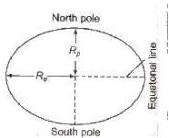
The value of acceleration due to gravity $g$ on tThe universal gravitational constant $G$ has the SI value approximately: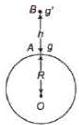
The acceleration due to gravity at height $h$ aboFor a satellite of mass $m$ orbiting Earth at radius $r$ (from the centre), the orbital velocity is: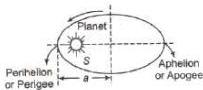
Kepler's first law (law of orbits) states that eaThe escape velocity from the Earth's surface is approximately ($R = 6.4 \times 10^6$ m, $g = 9.8$ m/s²):The universal gravitational constant G has approximate value:Newton's law of gravitation states the force between two masses is:At the surface of Earth, acceleration due to gravity g equals:At the centre of the Earth, the value of g is:Escape velocity from Earth's surface is approximately:The first cosmic velocity (orbital velocity at Earth's surface) is approximately:At a height h above Earth's surface where h ≪ R, g' equals:At depth d below Earth's surface, g' equals:Gravitational potential energy of a mass m at the surface of Earth (taking U at infinity as zero):Time period T of a satellite in orbit of radius r around Earth is (Kepler's 3rd law):Acceleration due to gravity at the EQUATOR compared to that at the POLES:Gravitational field strength I (also called g) at distance r from a point mass M:For a satellite to be GEOSTATIONARY (stays over the same point on Earth), its orbital period must equal:Two masses 6 kg and 3 kg are 2 m apart. Gravitational force between them (G = 6.67 × 10⁻¹¹):If Earth shrinks to half its radius keeping mass constant, the new escape velocity becomes:Kepler's second law states that the line joining a planet to the sun sweeps equal areas in equal times. This iA satellite is in circular orbit at radius 2R from Earth's centre. Its orbital velocity in terms of v_surface Total energy of a satellite in circular orbit equals:Two planets orbit the same star with semi-major axes 1 AU and 4 AU. Ratio of their orbital periods T1 : T2 is:Escape velocity from a planet of mass M and radius R is v. From a planet of mass 4M and radius 2R, escape veloAt what height above Earth's surface is g reduced to half its surface value?A body falls from infinity to Earth's surface. Its velocity at the surface (in terms of escape velocity v_e):Two satellites of equal mass orbit Earth at radii r1 and r2 = 2r1. Ratio of their kinetic energies KE1 : KE2:Gravitational potential at the centre of a uniform spherical shell of mass M and radius R:A geostationary satellite orbits Earth at radius r_g. Another satellite orbits at radius r_g/4. Its period is The acceleration due to gravity on Moon (mass 1/81 Earth, radius 1/4 Earth) is approximately:Gravitational PE of a 2 kg mass at altitude 2R above Earth's surface (g at surface = 10, R = 6400 km):At what point on the line joining Earth and Moon is the net gravitational field zero? (M_E = 81 M_moon)A satellite in elliptical orbit has maximum speed v_max at perigee (closest) and minimum v_min at apogee. The Total mechanical energy of a satellite escaping Earth from low orbit at radius R is:Per NCERT §7.2 (1st law), Kepler's law of orbits states that each planet moves in which kind of orbit around tPer NCERT §7.2 (2nd law), Kepler's law of areas states which quantity is constant for a planetary orbit?Per NCERT §7.2 (3rd law), Kepler's law of periods states which relation between period T and semi-major axis aPer NCERT §7.2, Kepler's 2nd law (equal areas in equal times) is equivalent to conservation of which quantity?Per NCERT §7.3, Newton's UNIVERSAL law of gravitation states that F between two point masses is proportional tPer NCERT §7.4, the value of the universal gravitational constant G is approximately which?Per NCERT §7.4, the FIRST experimental measurement of G was made by which scientist and when?Per NCERT §7.3 (eqn 7.4), the force on mass m₂ due to m₁ and the force on m₁ due to m₂ obey which relation?Per NCERT Example 7.1, in a system of N point masses, the total gravitational force on a particle is which?Per NCERT §7.3, the gravitational force between two point masses is which type of force in nature?Per NCERT §7.3, the dimensions of the gravitational constant G are which?Per NCERT §7.2 Table 7.1, Kepler's 3rd law is verified by planetary data showing T² / a³ is which?Per NCERT §7.5 eqn 7.12, the acceleration due to gravity on Earth's surface is given by which expression?Per NCERT §7.6 eqn 7.15, for SMALL height h (h ≪ R_E) above Earth, the variation of g with h is approximately Per NCERT §7.6 eqn 7.19, for depth d BELOW Earth's surface, the variation of g with d is which?Per NCERT §7.6, the value of g is MAXIMUM at which location on or near the Earth?Per NCERT §7.6, the value of g at the CENTRE of the Earth (assuming uniform density) is which?Per NCERT §7.6, at height h equal to R_E above the surface, the value of g(h) becomes which fraction of surfacPer NCERT Example 7.6 (weighing the Earth), using g and R_E gives M_E ≈ which value?Per NCERT Example 7.6, using the Moon's orbital data (T=27.3 d, R = 3.84×10⁸ m) gives M_E ≈ which value?Per NCERT §7.5 (eqn 7.5 onwards), the gravitational acceleration of a body INSIDE a uniform spherical shell ofPer NCERT §7.5 (shell theorem), the gravitational force on a particle OUTSIDE a uniform sphere of mass M is asPer NCERT §7.5, the dimensions of g (acceleration due to gravity) are which?Per NCERT §7.6 eqn 7.15, for an altitude of h = 8 km above Earth (R_E = 6400 km), g decreases by approximatelyPer NCERT §7.7 eqn 7.25, the gravitational potential energy of a particle of mass m at distance r from a mass Per NCERT §7.7, the gravitational PE for two particles of masses m₁ and m₂ separated by r is which?Per NCERT §7.8 eqn 7.31, the escape speed from a planet of mass M and radius R is which expression?Per NCERT §7.8 eqn 7.32, the escape speed can also be written using g and R as which?Per NCERT §7.8, the numerical value of escape speed from the Earth's surface is approximately which?Per NCERT §7.8, the escape speed from the Moon's surface is approximately which?Per NCERT §7.8, why does the Moon NOT retain a significant atmosphere?Per NCERT §7.7, the gravitational PE of a particle DOUBLED in distance (r → 2r) from a mass M changes from −GMPer NCERT Example 7.3, total gravitational PE of four equal masses at corners of a square of side l is approxiPer NCERT §7.8, the escape speed from a planet depends on which set of properties?Per NCERT §7.7 (eqn 7.25), the gravitational POTENTIAL (per unit mass) at distance r from a point mass M is whPer NCERT §7.7, the gravitational potential energy is a scalar quantity with dimensions which?Per NCERT §7.9 eqn 7.35, the orbital speed of a satellite at height h above Earth's surface is which?Per NCERT §7.9 eqn 7.37, the time period of a satellite at distance (R+h) from Earth's centre is which?Per NCERT §7.9 eqn 7.39, the period of a satellite orbiting CLOSE to Earth's surface (h ≪ R_E) is approximatelPer NCERT §7.10 eqn 7.40, the kinetic energy of an orbiting satellite of mass m at distance (R+h) is which?Per NCERT §7.10 eqn 7.41, the potential energy of an orbiting satellite at distance (R+h) is which?Per NCERT §7.10 eqn 7.42, the TOTAL mechanical energy of an orbiting satellite is which?Per NCERT §7.10, the relationship between total energy E and PE of an orbiting satellite is which?Per NCERT Example 7.5, the period of Mars' orbit (orbit radius 1.52 × Earth's) is approximately which?Per NCERT §7.9 (geostationary satellite, not stated but standard), the orbital period of a geostationary satelPer NCERT Example 7.8, energy required to move a satellite from a circular orbit at 2R_E to 4R_E around Earth Per NCERT §7.9 + Example 7.7, for the Moon's orbit (R ≈ 3.84 × 10⁵ km), the time period computed from k = 1.33Per NCERT §7.9, the orbital speed v of a satellite scales with orbital radius r as which?A planet's semi-major axis is doubled. Its orbital period changes by a factor of approximately:Two coins of unequal mass are dropped from a balcony in vacuum. They reach the floor:Earth's escape speed at the surface is about (taking $g = 9.8$ m/s$^2$, $R = 6.4\times 10^6$ m):A satellite of mass $m$ in a circular orbit of radius $r$ around a planet of mass $M$ has total mechanical ene