JEE Main Ray Optics — practice questions
63 free MCQs with worked solutions. Tap any question for the answer + explanation, or practice them all in the app.
Practice JEE Main Ray Optics in the app →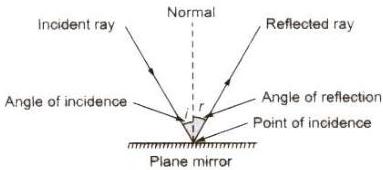
In the figure above, $AB$ is the incident ra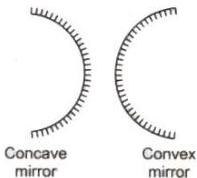
The figure shows two spherical mirrors. The 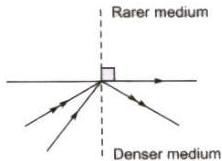
The phenomenon illustrated in the figure oc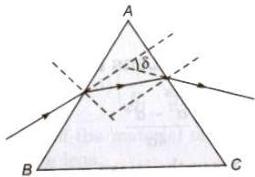
A monochromatic light ray passes through a 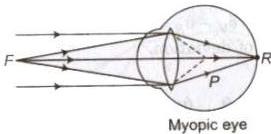
The figure shows an eye defect in which par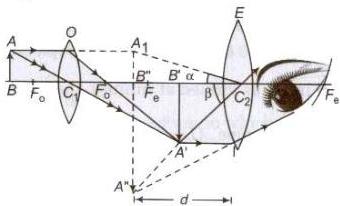
The figure shows a compound microscope. ForA concave mirror of focal length $20$ cm forms a real image of an object placed $30$ cm from the mirror. Find The speed of light in a transparent medium of refractive index $1.5$ is approximately: (speed of light in vacuA convex lens forms a real image at $60$ cm on one side of an object placed $20$ cm in front of it. Find the fTwo thin lenses of focal lengths $+10$ cm and $+20$ cm are placed in contact. The power of the combination, inA light ray travels from glass ($\mu = 1.5$) to air. The critical angle for total internal reflection at the gAn astronomical telescope in normal adjustment has objective focal length $f_o = 100$ cm and eyepiece focal leSnell's law of refraction states:For a plane mirror, image is:Focal length of a concave mirror with radius of curvature R:Mirror formula relating object distance u, image distance v, focal length f:Magnification by a mirror:Refractive index of water is 1.33. Critical angle for water-air interface:For a thin lens, lens-maker's formula:For a convex lens, an object at 2f forms image at:Power of a lens (P) is defined as:Two thin lenses of powers P₁ and P₂ in contact give combined power:Refraction by a prism: deviation δ depends on:In a compound microscope, magnification by objective is m_o, eyepiece is m_e. Total magnification:Telescope's angular magnification (normal adjustment, image at infinity):Speed of light in a medium of refractive index n:Object at focus of a convex lens. Image is:An object 4 cm tall is placed 30 cm in front of a concave mirror of focal length 20 cm. Image position and sizFor an apparent depth of swimming pool seen from above (real depth d, water n = 4/3):Critical angle for diamond (n = 2.42):Combination of two lenses, f₁ = 20 cm convex and f₂ = -25 cm concave, in contact. Equivalent power:Dispersion of light by prism: angular dispersion (δ_violet - δ_red) for thin prism:A coin at the bottom of a 0.5 m water tank (n = 4/3) appears at depth:In Young's double slit experiment, fringe width:Refractive index of medium 1 w.r.t. medium 2 is n₁₂. Then:Magnifying power of simple magnifier (image at near point):For object at 60 cm from convex lens of f = 20 cm, image is:For total internal reflection at glass-water interface (n_g = 1.5, n_w = 1.33), critical angle:A ray enters a glass slab at 45°. Glass n = 1.5. Angle of refraction inside glass:A concave mirror of focal length $20$ cm forms a real image at $30$ cm from the pole. The object is at:Light enters a glass slab ($n = 1.5$) from air ($n = 1$) at angle of incidence $30^\circ$. The angle of refracA glass-to-air interface has refractive index ratio $n = 1.5$. The critical angle for total internal reflectioA convex lens has focal length $+10$ cm. A pencil placed $30$ cm from the lens forms an image at:In NCERT's sign convention for spherical mirrors, distances are measuredThe mirror equation relates u, v and f asTotal internal reflection requires light to travel fromFor a thin lens, the focal length is the distance from the optical centre toThe power P of a lens of focal length f (in metres) is given byAn object is placed 30 cm from a concave mirror of focal length 20 cm. The image distance isRefractive index of water with respect to air is 4/3. The critical angle for a water–air interface is approximA convex lens of focal length 20 cm is placed in contact with a concave lens of focal length 25 cm. The power Light passes from air (n=1) into glass (n=1.5) at an incidence angle of 60°. Using Snell's law, the angle of rFor a thin prism of small refracting angle A and refractive index n, the deviation δ is approximatelyAn astronomical telescope in normal adjustment has an objective of focal length 100 cm and an eyepiece of focaAn object is placed 15 cm from a convex lens of focal length 10 cm. The image isThe apparent depth of an object lying at the bottom of a pool of water (n = 4/3) is, in terms of its real deptGlass has refractive index 1.5 with respect to air. A light ray inside the glass strikes the glass–air boundarA compound microscope has an objective of focal length 1.0 cm and an eyepiece of focal length 5.0 cm. With theA converging lens of focal length f is split along its principal axis into two semicircular halves and the halRefraction at a single convex spherical surface: an object in air (n₁ = 1) at distance 20 cm from a glass (n₂ A thin prism of refracting angle 5° is made of glass with n = 1.5. The deviation δ of a light ray passing throA Galilean telescope (objective convex, eyepiece concave) has objective focal length 20 cm and eyepiece focal Two thin convex lenses, each of focal length 20 cm, are placed coaxially 10 cm apart in air. The equivalent fo