Practice free →
HomeJEE MainPhysics › Current Electricity

JEE Main Current Electricity — practice questions

120 free MCQs with worked solutions. Tap any question for the answer + explanation, or practice them all in the app.

Practice JEE Main Current Electricity in the app →
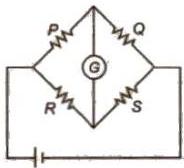
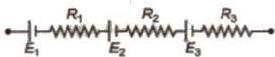
A circuit contains a single loop with one source and several elements as shown. Why does the sum of the listedWhich statement best describes the sign convention used when applying Kirchhoff's Voltage Law to a loop?In the current-junction figure, suppose $I_1$, $I_2$, and $I_3$ are entering the node while $I_4$, $I_5$, and Which pair correctly matches the law with its physical basis?A student traverses a closed loop and adds all voltage rises and drops with proper signs. If the final sum is If $V_1=1\,\text{V}$, $V_2=2\,\text{V}$, $V_3=1\,\text{V}$, $V_4=3\,\text{V}$, $V_5=2\,\text{V}$, $V_6=1\,\texFrom the loop equation $V_1+V_2+V_3+V_4+V_5+V_6+V_7-V_s=0$, the source voltage is equal toIn the loop shown in the figure, which expression matches Kirchhoff's Voltage Law as printed in the notes? ![Kirchhoff's Voltage Law is based on conservation ofAccording to Kirchhoff's Voltage Law, the algebraic sum of all potential differences around a closed loop isKirchhoff's Current Law is a direct consequence of conservation ofIf at a node $I_1=2\,\text{A}$, $I_2=3\,\text{A}$, $I_3=1\,\text{A}$ enter the junction and $I_4=4\,\text{A}$,Using the junction shown in the figure, which equation correctly represents Kirchhoff's Current Law? ![](httpAccording to Kirchhoff's Current Law, what is true at any junction in an electric circuit?Which of the following is a correct general form of Kirchhoff's Voltage Law for any closed loop, using signed In the voltage-loop figure, which pair of elements on the top horizontal branch both have polarity marked $+$ Suppose you move once completely around a closed loop in a circuit and return to the starting point. The net cIn an ideal steady-state circuit, why can current not simply 'disappear' at a junction?Which statement best distinguishes Kirchhoff's Current Law from Kirchhoff's Voltage Law?A student writes for a junction, 'the algebraic sum of currents at a node is zero.' This is equivalent to KircIf the voltage drops across the passive elements in the loop are $V_1=1\,\text{V}$, $V_2=2\,\text{V}$, $V_3=1\For the loop shown in the figure, which expression matches Kirchhoff's Voltage Law as written in the notes? !In the loop shown, if you traverse clockwise starting from the lower left corner, crossing the source from itsKirchhoff's Voltage Law for a loop is fundamentally a statement of conservation ofIf in the junction relation $I_1+I_2+I_3=I_4+I_5+I_6$, the values are $I_1=2\,\text{A}$, $I_2=3\,\text{A}$, $IUsing the junction in the figure, Kirchhoff's Current Law gives which relation? ![](https://qallery.app/diagrIn the junction shown in the figure, which set of currents is entering the node? ![](https://qallery.app/diagAccording to Kirchhoff's Voltage Law, the algebraic sum of all potential differences around any closed loop isKirchhoff's Current Law at a junction is based on conservation of which physical quantity?A student says: 'Static electricity and current electricity are the same because both involve charge.' Which rWhich comparison correctly distinguishes conductors, resistors, and insulators?A heating element in an appliance should not allow current to pass as freely as copper does. Which material frWhich set contains only insulators?Which of the following is listed as a resistor material rather than a good conductor?A wire allows electric current to pass through it freely because it hasWhich of the following materials is the best example of a conductor based on the given definitions?Current electricity is the study ofA student accidentally connects an ammeter in parallel across a component and a voltmeter in series with it. WIn the circuit shown, which statement is correct about the instruments? ![](https://qallery.app/diagrams/v2_fWhy does an ammeter have very low resistance?An ammeter is connected in series in a circuit because it mustAn ammeter is used to measureOne ampere is defined as the current whenThe SI unit of electric current isIf $6\text{ C}$ of charge passes through a conductor in $3\text{ s}$, the current isThe correct relation for electric current isElectric current is defined asA voltmeter is made with very high resistance mainly so that itWhy is a voltmeter connected in parallel with the component across which potential difference is to be measureA voltmeter is used to measureThe potential difference between two points is said to be $1\text{ V}$ whenA conductor carries a steady current of $3\,\text{A}$ for $20\,\text{s}$. How much charge passes through it?A student accidentally connects a voltmeter in series and an ammeter in parallel with a resistor. Which statemIn the circuit shown, what can be inferred about the way the two measuring instruments are connected? ![](httWhy is an ammeter made with low electrical resistance?An ammeter is connected in series in a circuit becauseWhich instrument is used to measure the electric current flowing through a conductor?One ampere is defined as the current whenThe SI unit of electric current isIf $2\,\text{C}$ of charge passes through a cross-section of a conductor in $4\,\text{s}$, the current isElectric current is best described asWhy is a voltmeter made with high electrical resistance?A voltmeter is connected in parallel with a resistor mainly because it shouldWhich instrument is used to measure the potential difference across the ends of a conductor?A potential difference of $1\,\text{V}$ between two points means thatIn the circuit shown for verifying Ohm's law, suppose the path is broken by opening the key. What is the immedWhy is it important to vary the current and take multiple readings while verifying Ohm's law?A student measures $V$ and $I$ for a conductor at constant temperature and finds that the ratio $V/I$ remains Refer to the circuit diagram for verifying Ohm's law. Which component is used to open or close the circuit durIn the Ohm's law apparatus shown, which labelled component is connected across the conductor segment XY to meaWhat is the primary function of the rheostat in the Ohm's law verification circuit?In the experimental verification of Ohm's law, the ammeter is connected in series mainly because it must measuIn the setup used for verifying Ohm's law, the instrument that must be connected across the conductor whose reIf the potential difference across an ohmic conductor is doubled while temperature remains constant, the curreOhm's law is valid under the condition that theThe quantity $R = \dfrac{V}{I}$ for a conductor is called itsFor a conductor obeying Ohm's law, which equation correctly relates potential difference $V$, current $I$, andAccording to Ohm's law, when temperature remains constant, the current through a conductor isAn electric circuit is best described as which of the following?Ohm's law states that, for an ohmic conductor at constant temperature:![](https://qallery.app/diagrams/v2_current_seed_1/img-3.jpeg) Three resistors of $2\,\Omega$, $4\,\Omega$ an![](https://qallery.app/diagrams/v2_current_seed_1/img-8.jpeg) In the Wheatstone bridge shown above, $P = 4\,Three identical resistors, each of resistance $R$, are connected in **parallel**. The equivalent resistance is![](https://qallery.app/diagrams/v2_current_seed_1/img-5.jpeg) $n$ identical cells, each of EMF $E$ and interA $10$-m-long potentiometer wire of uniform resistance is connected to a $6$-V battery (and no other resistancThe SI unit of electric current is:The current I is related to charge q and time t by:Electric current is a:Ohm's law states V = ___ ?The SI unit of resistance is:For resistors in series, the equivalent resistance is:For resistors in PARALLEL, the equivalent resistance is given by:Kirchhoff's Current Law (KCL) is based on conservation of:Kirchhoff's Voltage Law (KVL) is based on conservation of:A galvanometer can be CONVERTED to an ammeter by:Find the equivalent resistance of 2 Ω and 3 Ω connected in SERIES:Find the equivalent resistance of 6 Ω and 3 Ω in PARALLEL:A battery with emf 12 V and internal resistance 1 Ω drives 2 A current. Find terminal voltage V:Resistance R of a conductor is proportional to:Two resistors 4 Ω and 12 Ω are in parallel; this combination is in series with 8 Ω. Total resistance:Drift velocity v_d is given by:In a Wheatstone bridge, BALANCE condition gives:A 2 Ω, 4 Ω and 6 Ω resistor are in parallel. Equivalent resistance:To convert a galvanometer to a VOLTMETER, connect:Three cells of emf 2 V each, internal resistance 0.5 Ω each, are connected in series. Total emf and internal rThree identical cells with emf 1.5V and internal resistance 0.6 Ω each are connected in parallel. Find equivalIf a wire of resistance R is cut into 4 equal parts and joined in parallel, the new resistance is:A potentiometer is a NULL device used to:A 10 V battery is connected across a 5 Ω resistor. The current through the resistor is:Specific resistivity (ρ) of a conductor depends mainly on:An ammeter has 0.1 Ω resistance and 1 mA full-scale current. The shunt needed to extend range to 1 A:In a Wheatstone bridge: P = 4Ω, Q = 8Ω, R = 6Ω. For balance, S =Five identical bulbs are connected in series across an emf of 100V. Each bulb has resistance 5 Ω. Find total cA 12V battery (internal r = 0.5 Ω) drives current through 5.5 Ω external load. Find power dissipated in EXTERNA copper wire of length 1 m and cross-section 1 mm² has resistivity 1.7 × 10⁻⁸ Ω·m. Its resistance is:Two batteries with emf E₁ = 4V (r₁ = 1Ω) and E₂ = 6V (r₂ = 2Ω) in parallel. Find equivalent emf:A wire of resistance 10 Ω is stretched to double its length without changing volume. Its new resistance:In a circuit, drift velocity of electrons is 10⁻⁴ m/s. Number density of free electrons is 10²⁹ /m³. Charge peMaximum power transfer from a source occurs when external resistance equals:In a meter bridge experiment, the null point divides the wire as 30 cm and 70 cm. If known resistance is 6 Ω,