Home › JEE Advanced › Vectors & 3D Geometry › In the figure shown, which statement about the r…
In the figure shown, which statement about the represented vector is correct? 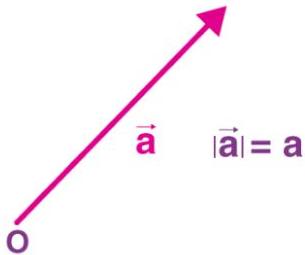
ARotating it through any angle leaves the vector unchanged
BDisplacing it parallel to itself changes its magnitude
CAnother vector with the same magnitude and direction can replace it
DIts tail and head can be interchanged without changing the vector
Answer & Solution
Correct answer: C. Another vector with the same magnitude and direction can replace it
The notes state that a vector can be replaced by another when its magnitude and direction are the same. A parallel displacement does not change the vector, but rotation through an angle other than $360^\circ$ does. Interchanging tail and head reverses the direction.
Related questions
Two nonzero vectors have a scalar product of zero when they are:The vector product of two vectors gives a:The dot product of two vectors returns a:Vectors that may be shifted parallel without change are called:The triangle law and the parallelogram law of addition are:Two vectors on adjacent sides of a parallelogram add along the:The relation AC = AB + BC states the:A vector equal in size but opposite in direction is the: