 allery
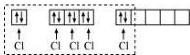 What is the hybridisation of the central P atom in $\mathrm{PCl_5}$?
A$sp^2$
B$sp^3d^2$
C$sp$
D$sp^3d$
Answer & Solution
Correct answer: D. $sp^3d$
P in $\mathrm{PCl_5}$ has five bonded chlorines and no lone pair.
That gives five electron domains.
The hybridisation needed is $sp^3d$ (one $s$ + three $p$ + one $d$ orbital = five hybrid orbitals).
The molecular geometry is trigonal bipyramidal.
$sp^3d^2$ would give six domains and an octahedral geometry, which is what you see in $\mathrm{SF_6}$, not $\mathrm{PCl_5}$.
Keep practising Chemical Reactions and Equations
Browse all Chemical Reactions and Equations questions for Andhra Pradesh SSC (Class 10), or explore more Science topics.
Related questions
Fill in the chemistry basicsMatch each science fact to the correct answerWhich is the bond pattern of nitrogen molecule N2?How can ethanol be converted to ethene?Which of the following is an unsaturated hydrocarbon?Why do soaps NOT work well in hard water?Graphite is soft and a good conductor of electricity because:Diamond conducts heat well but does NOT conduct electricity because: